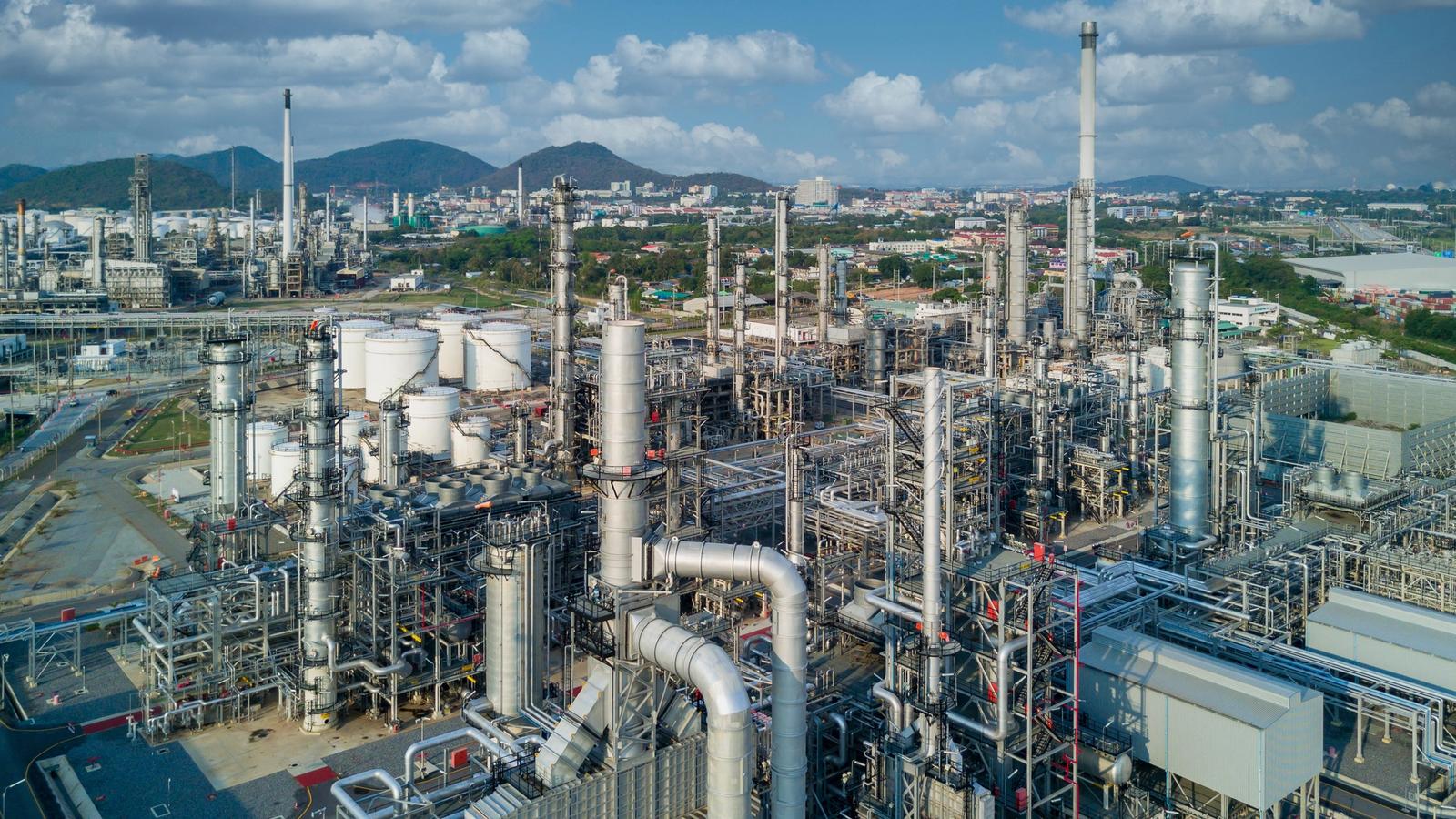
Aduro Just Hired a €15 Billion Engineering Firm to Build Its First Plant
Aduro’s selection of Saipem for early engineering work at its planned Chemelot facility marks another step toward industrializing HCT. The engagement connects ongoing pilot data with real-world engineering, equipment selection and capital planning, helping establish the foundation for Aduro’s first industrial facility and potential future deployments.
I own a long position in ADUR
On August 19, Aduro announced that it has selected Saipem S.p.A. for Early Works and Services supporting development of its First-of-a-Kind Hydrochemolytic™ Technology facility at Chemelot in the Netherlands.
I want to be careful here, because this is exactly the kind of announcement that retail investors either dismiss (”it’s just engineering”) or wildly oversell (”Saipem is building the plant!”). Neither is right. What actually happened is narrower than the bulls will say and more significant than the skeptics will admit.
Let me walk through what I think this is.
1. What “Early Works” actually means
Industrial projects don’t go from idea to steel in one step. The conventional sequence in process engineering looks roughly like this:
- Process Design Package (PDP) — the technology owner’s basis of design
- Early Works / pre-FEED — an EPC contractor reviews the PDP, tests assumptions, scopes long-lead equipment, refines cost
- FEED (Front-End Engineering Design) — the detailed engineering package that supports a capital decision
- Detailed engineering, procurement, construction
- Commissioning and start-up
Aduro is entering step 2. That’s it. The press release is explicit that progression through FEED, detailed engineering, procurement, construction, commissioning and start-up is conditional on completing each development stage, continued evaluation by both parties, and executing definitive agreements.
Read that again, because it’s the whole ballgame: Saipem has not committed to build this plant. The forward-looking statements section even lists, as a named risk, the possibility that the parties never enter a full FEED services contract.
2. But the counterparty is the point
Here’s why I still think this is one of the year's more meaningful disclosures.
Saipem is not a boutique. FY2025 revenue was roughly €15.5 billion, with a backlog above €31 billion and something north of 30,000 employees across offshore and onshore engineering and construction. This is a firm that builds trunklines for Aramco and process facilities in the energy and chemicals sector at industrial scale.
Firms of that size have gatekeeping functions. They have technology assessment teams whose job is to tell business development “no.” They have reputational exposure; a Tier-1 EPC that puts its name on a first-of-a-kind unit that fails has a problem that a €15 billion revenue base does not paper over.
The press release notes the selection followed a comprehensive evaluation process. I read that as bidirectional. Aduro evaluated contractors; contractors evaluated Aduro. Saipem looked at the Hydrochemolytic chemistry, the NGP pilot data, and the FOAK basis of design, and decided the project was worth putting engineers on.
That is not the same as technical validation; Saipem is being paid, and paid engineers work on projects that later fail. But it is a counterparty with a reputation, a technical assessment function, and no obvious incentive to attach itself to a small-cap process that doesn’t hold up. In a sector where every developer claims a breakthrough, who is willing to sit across the table from you is real information.
I’ve written before that the most useful signal in a pre-revenue story is not what management says about the technology; it’s who else is willing to spend their own time on it. Zeton built the pilot. Siemens did the automation. An unnamed steam-cracker licensor ran the oil through a furnace. Ebert HERA took the permitting. Now Saipem takes the engineering. The list of counterparties has gotten steadily less exotic and more industrial.
3. The five words I care about most
“funded from the Company’s existing cash resources”
Early Works activities are expected to be funded from existing cash and are not expected to require additional financing.
For a development-stage company, this line does a lot of work. It tells you the near-term engineering spend does not come with a raise attached. Aduro closed a LIFE offering in June 2026; depending on the source, pro forma cash sits somewhere in the C$65–72 million range against roughly C$10 million of annual burn. (Roth modelled approximately US$50.6 million post-offering; I’d treat any specific figure as needing verification against the FY2026 year-end filing before you build on it.)
The point isn’t the exact number. The point is that Aduro can fund the engineering phase without going back to the market, and management chose to say so in the second paragraph of the release. That sequencing is deliberate. It preempts the reflexive small-cap assumption that every partnership announcement is a financing announcement in disguise.
4. What Saipem is actually doing and the number it will produce
The initial scope covers four things: reviewing the Process Design Package, optimizing critical equipment packages, preliminary utility integration, and refining capital costs.
That last one deserves its own paragraph.
We do not currently have a company-disclosed capex figure for the Chemelot FOAK plant. What we have are sell-side estimates. Roth’s July initiation modelled roughly US$50 million of total installed cost to reach 25,000 tonnes per year, with the facility built initially at 10,000 t/yr. That’s an analyst’s number, not Aduro’s.
A Tier-1 EPC refines capital cost estimates into a real number. And a real number is the input every valuation model in this story is currently guessing at. If you’re running a licensor DCF as I am, the capex per tonne of installed capacity drives licensee project economics, which drives royalty capacity, which drives the entire licensing thesis. A credible FOAK capex disclosure would be one of the highest-information events available to us in the next twelve months, and it could cut either way.
I’d rather have the honest number early than a flattering one late.
5. The pilot-engineering feedback loop
The release says engineering activities are deliberately aligned with ongoing NGP pilot campaigns, so operating lessons feed directly into industrial design.
Two ways to read this, and I think both are true.
The bull reading: this is exactly what a disciplined scale-up looks like. The June 2026 campaign produced roughly 86% liquid hydrocarbon yield with about 85% at C20-and-below over a 47-hour continuous run, including a two-hour recovery from deliberate disturbance. Those are design inputs. Feeding them into engineering as they’re generated, rather than freezing a design in 2025 and hoping, materially lowers the risk of building the wrong plant.
The bear reading: a design that keeps absorbing new data is a design that hasn’t been frozen. Design freeze is what makes schedules real. Every process developer that has slipped has slipped partly because “one more optimization” kept arriving. The integrated approach is genuinely lower-risk on technology and genuinely higher-risk on schedule.
I hold both. I don’t think you get to claim the first benefit without accepting the second cost.
6. The open question nobody has answered
In March 2026, Aduro signed a non-binding MOU with an unnamed “leading Global Engineering, Procurement, and Construction organization” to jointly develop a commercial licensing package and a pre-engineered plant concept, the foundation of the licensing business model that carries most of the long-term value in my framework.
Is Saipem that GEPC?
Aduro has not said so, and I am not going to assert it. The August 19 release does not connect the two, and the March release described a counterparty with a long track record of working alongside technology licensors, a description that fits several firms. It would be tidy if they were the same party. Tidy is not evidence.
This matters more than it looks. If Saipem is the GEPC, then the licensing pathway and the FOAK execution pathway run through one relationship that is now deepening a big deal. If they’re separate, then Aduro has two independent Tier-1 engineering relationships, which is a different and arguably more robust structure. Either is fine. Guessing which one is true is how people end up wrong in public.
If someone asks you on X whether Saipem is the GEPC, the correct answer is “the company hasn’t disclosed that.”
7. What this announcement does not tell you
Let me be explicit, because I’d rather own the limitations than have them pointed out to me:
- It does not validate the chemistry. Saipem is an engineering contractor, not a technology certifier.
- It does not commit Saipem to FEED, construction, or anything beyond the Early Works scope.
- It does not disclose contract value, and Early Works scopes at this stage are typically small relative to project capex.
- It does not solve permitting, which remains the stated gating risk at Chemelot.
- It does not convert the offtake LOI into a binding agreement.
A Conditional Letter of Award is referenced in the forward-looking statements. “Conditional” is doing real work in that phrase.
8. What I’m watching from here
In rough order of information value:
- Execution of a full FEED services contract with Saipem. This is the first genuine confirmation that Early Works cleared its gate. Absence of this by mid-2027 would be a meaningful negative signal.
- A company-disclosed FOAK capital cost. The single most valuable number Aduro could give us.
- Chemelot permitting milestones under the Ebert HERA engagement.
- FID and groundbreaking. The transition from planning to capital deployment.
- Offtake LOI → binding agreement, which sets the first real benchmark on circular naphtha realization.
- Whether the GEPC is ever named, and whether the licensing package progresses to definitive terms with performance guarantees.
- Continued NGP campaign data, particularly on mixed and contaminated feedstocks and energy consumption.
9. What would change my mind
Unchanged from what I’ve written before, and this announcement doesn’t move any of them:
- Scale-up failure at FOAK. The step from 10 kg/hr at NGP to roughly 1,000 kg/hr at Chemelot is the central technology risk. Engineering support reduces execution risk; it does not eliminate scale-up risk.
- No commercial license signed by end of 2028. The licensing model drives the valuation. An EPC relationship is the delivery mechanism, not the revenue.
- Repeated dilutive raises at falling prices. Today’s release addresses the near-term version of this. It doesn’t address the FOAK construction financing that follows.
Druckenmiller’s line, put your eggs in one basket and watch the basket very carefully, is the whole discipline here. Watching carefully means noticing when a stage gate opens, and equally noticing when one doesn’t.
The short version
Aduro moved from “we have selected a site and a permitting consultant” to “a top-tier global EPC is now doing engineering on our plant, and we’re paying for it out of cash on hand.” That’s a real step up the ladder. It is also, precisely, one rung, with FEED, FID, financing, permitting, and construction all still above it.
The stage-gate structure cuts both ways, and I think that’s the honest frame. It means Aduro is proceeding with discipline rather than committing capital ahead of data. It also means every gate is a place the project can stop.
I own this. I’m watching the gates.
Sourcing note: All company facts above are drawn from Aduro’s August 19, 2026 press release and prior GlobeNewswire disclosures. Saipem financials are from Saipem’s own FY2025 reporting. Roth Capital and Water Tower Research estimates are labelled as such. Verify cash figures against Aduro’s most recent filing before use. Where I’ve speculated, I’ve said so.
This is not financial advice. I own shares of $ADUR, and it represents ~30% of my equity portfolio, so I am biased. Long $ADUR | Not financial advice | DYOR.
This article reflects personal research and opinions and is provided for informational purposes only. It is not financial advice, a recommendation to buy or sell any security, or a consideration of your individual circumstances. Investing in small-cap and pre-commercialization companies involves significant risk, including the risk of total loss. Always do your own research and consider speaking with a qualified financial professional before making investment decisions.
Stay Informed with The Wire
Get the latest insights and analysis on public companies delivered directly to your inbox.